From Cottage Kitchen to Commercial Producer: How Florida Food Brands Scale Up
Many food businesses begin with a small operation. A founder develops a product, tests it with customers and begins building demand through local markets, direct sales or online orders. At that stage, a home based or cottage kitchen model may provide enough production capacity to get the business started.
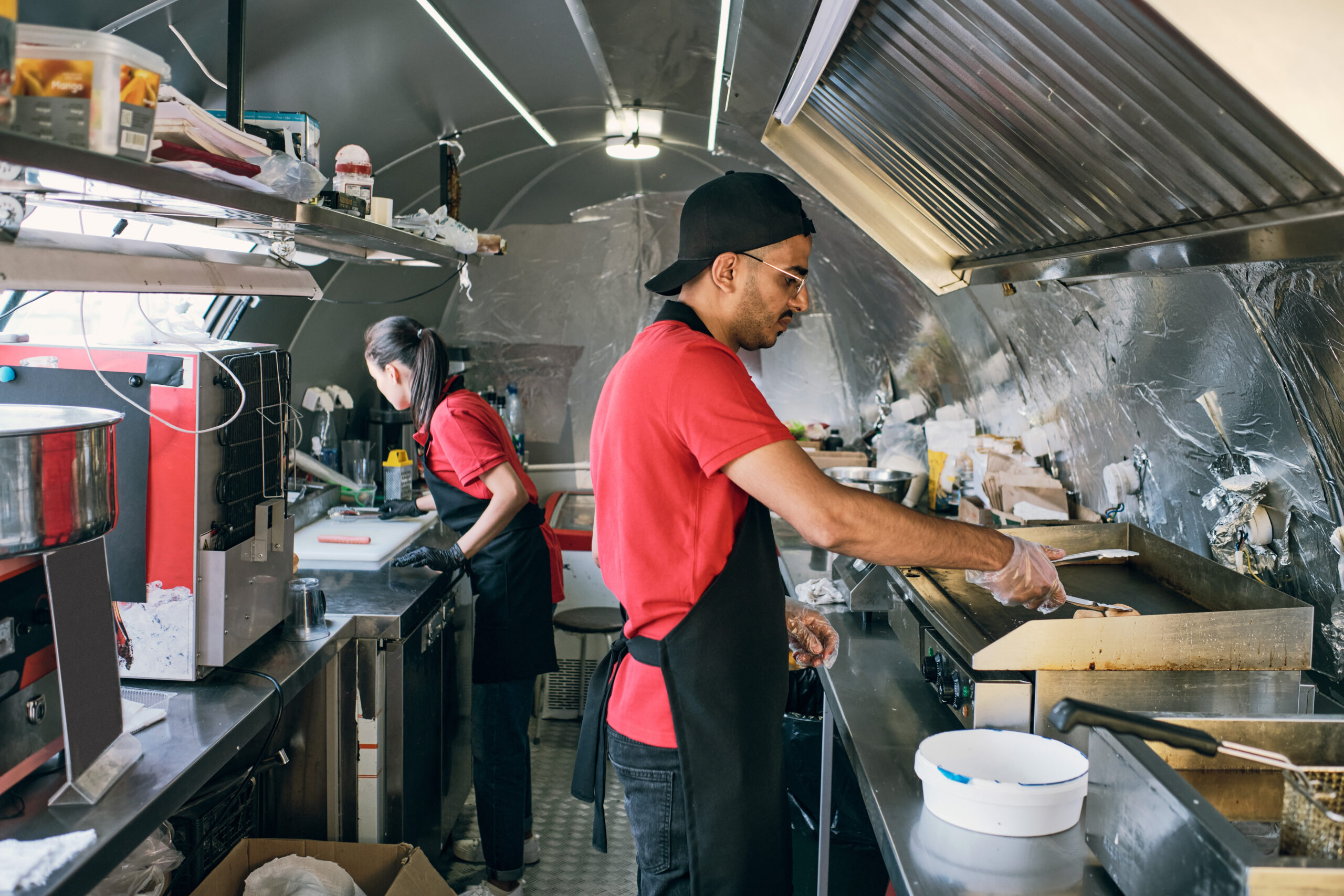
Growth changes the equation. More customers can mean larger ingredient orders, additional equipment, more storage, longer production days and a greater need for consistent processes. A business that once produced a few dozen units at a time may eventually need to produce hundreds or thousands while maintaining the same quality.
For Florida food brands, moving from a cottage kitchen to commercial production is not simply about finding a larger kitchen. It requires planning for capacity, inventory, staffing, equipment and cash flow while building systems that can support a larger operation.
AOF’s food and beverage resources provide additional guidance for entrepreneurs navigating operations, financing and growth in the food industry.
When Has a Cottage Food Business Outgrown Its Current Setup?
Production Capacity Starts Limiting Sales
One of the clearest signs that a food business may be ready to scale is when existing production capacity begins limiting how much the company can sell.
A founder may spend most of the day preparing products but still struggle to fill orders. A mixer may only handle small batches. Refrigeration space may limit inventory. Packaging may take too long when every unit is completed by hand.
When these constraints regularly cause the business to turn away demand or delay orders, the issue may no longer be marketing. The business may have reached the limit of its current production system.
Before expanding, owners should identify exactly where capacity is being lost. AOF’s guide to capacity planning for growing businesses can help owners determine whether demand is growing faster than their current systems can support.
New Sales Opportunities Require a Different Operation
Growth may also come from opportunities that require more production than the current setup can provide. A local retailer may want to carry the product. A distributor may ask about larger quantities. A corporate customer may request recurring orders.
Those opportunities can be attractive but accepting them before the business is operationally ready can create problems. Larger orders require more than additional ingredients. They may also require more production time, packaging capacity, storage space and working capital.
Florida food businesses should also understand that changes in production methods, products and sales channels can affect which regulatory requirements apply. Owners should confirm current state and local requirements before changing their production model or committing to a new facility.
What Changes When a Food Brand Moves Into Commercial Production?
Production Has to Become Repeatable
A small food business may rely heavily on the founder’s experience. The owner knows how long something should cook, how a mixture should look and what to do when a batch is slightly different.
That becomes harder as production increases and more people become involved.
Commercial production requires clearer systems. Recipes should use standardized measurements. Production steps should be documented. Employees should know how products are prepared, packaged and stored. The business should also be able to track how much finished product is expected from each production run.
The goal is consistency. A customer buying the product for the hundredth time should receive the same experience as the customer who bought it when the business was still producing small batches.
The Founder’s Role Begins to Change
Scaling can also change the owner’s job.
In the beginning, the founder may personally make the product, purchase ingredients, package orders, respond to customers and manage bookkeeping. As production grows, doing everything personally can become one of the biggest constraints on the business.
The owner gradually needs to spend more time building systems, managing employees, reviewing finances and planning growth rather than personally completing every production task.
AOF’s guide on how to run a business provides additional guidance for owners building the operational structure needed to support growth.
How Much Production Capacity Should You Add?
Start With the Current Bottleneck
Scaling does not necessarily mean replacing every piece of equipment at once.
Start by identifying what is actually limiting production. The constraint might be mixing, baking, refrigeration, filling, labeling, packaging or storage.
For example, a bakery may have enough oven capacity but spend several hours packaging products manually. In that situation, purchasing another oven may not meaningfully increase output. Improving the packaging process could have a greater effect.
The right investment solves an identifiable production problem.
Do Not Build Capacity Far Beyond Realistic Demand
It can be tempting to purchase equipment based on where the business hopes to be several years from now. The risk is paying for capacity that remains unused.
Consider the difference between current production and realistic near term demand.
Current Capacity = Units Produced per Production Cycle × Number of Production Cycles
Then estimate:
Required Capacity = Expected Sales Volume + Reasonable Capacity Buffer
The business needs enough additional capacity to support growth without creating an unnecessarily large fixed cost.
What Equipment Might a Growing Florida Food Brand Need?
Equipment needs depend on the product and production process. A growing bakery may need commercial mixers, ovens or cooling equipment. A beverage company may need filling or bottling systems. A packaged food business may need refrigeration, sealing machines or automated labeling equipment.
The purchase should connect directly to a measurable operational need. Owners should understand how much additional production the equipment can support and whether the expected sales justify the investment.
Equipment cost also extends beyond the purchase price. Delivery, installation, facility modifications, maintenance and employee training may all need to be included in the project budget.
Businesses comparing different equipment options can also review AOF’s information on equipment leasing before deciding how to acquire the equipment.
How Should Inventory Management Change as the Business Grows?
Larger Production Requires Better Inventory Visibility
Inventory can become much more complicated once production increases.
A small operation may be able to manage ingredients informally because the owner knows what is in the kitchen. Commercial production requires a more structured approach to ingredient quantities, packaging materials, supplier lead times, reorder points and finished products.
Running out of one critical ingredient or packaging component can delay an entire production cycle. Ordering too much can create another problem by tying up cash in inventory that has not yet been sold.
AOF’s guide to inventory management techniques provides additional strategies for tracking stock and improving purchasing decisions.
Larger Orders Are Not Always Better Orders
Suppliers may offer lower per unit prices when a business purchases larger quantities. That can reduce production costs but only if the inventory is actually used.
Before accepting a large supplier order, calculate how long it will take to use the inventory and how much working capital will be tied up during that period.
Food businesses should also consider shelf life, storage requirements and supplier reliability when deciding how much inventory to purchase.
How Do Supplier Relationships Change During Commercial Growth?
As production increases, suppliers become a more important part of the operation.
A delayed ingredient shipment that was inconvenient when the business produced 100 units can become a much larger problem when production has grown to several thousand units.
Owners should understand supplier lead times, minimum order quantities, delivery schedules and payment terms. It may also make sense to identify alternative suppliers for ingredients or packaging materials that are critical to production.
The lowest price is not always the most important consideration. Reliability becomes increasingly valuable when customer orders depend on production happening on schedule.
When Should a Growing Food Business Start Hiring?
Hire Around the Biggest Operational Constraint
Hiring should solve a clear business need.
If the founder spends most of the day packaging products, hiring production support may free time for sales and business management. If customer orders are increasing but administrative work is taking too much time, the first hire may need to support operations rather than production.
The goal is not simply to add employees because the business is growing. Each hire should help create additional capacity or improve how the company operates.
AOF’s resource on hiring your first employee can help owners think through the transition from working alone to managing a team.
Calculate the Full Cost of Additional Labor
Wages are only one part of the cost of hiring.
Businesses should also consider payroll expenses, training time, scheduling and the time required before a new employee becomes fully productive.
A useful question is whether the additional employee allows the company to produce or sell enough additional product to justify the expense.
How Does Scaling Affect Cash Flow?
Growth Often Requires Spending Before Revenue Arrives
One of the most important parts of scaling is understanding that growth often requires cash before it produces additional cash.
A food company may need to purchase ingredients, packaging and equipment before producing a larger order. Employees may need to be paid before the customer pays the invoice.
For example, a retailer may place an order that is three times larger than the company’s normal production run. That is a positive sales opportunity but fulfilling the order may require substantially more inventory and labor before the revenue arrives.
AOF’s cash flow planning resources can help business owners anticipate when cash enters and leaves the business.
Protect Working Capital During Expansion
A business can invest so much money in expansion that it becomes difficult to fund normal operations.
New equipment, facility deposits and improvements may consume a large amount of available cash. The business still needs money for ingredients, payroll, utilities, packaging and other operating expenses.
Before committing to a major expansion, owners should calculate how much cash will remain after the initial investment and whether that amount is enough to support the larger operation.
How Should a Florida Food Brand Budget for Commercial Production?
The cost of moving into commercial production goes beyond rent or equipment.
A complete growth budget may include:
- Facility deposits and rent
- Production equipment
- Equipment installation
- Refrigeration and storage
- Ingredients
- Packaging
- Payroll
- Insurance
- Utilities
- Transportation
- Marketing
- Working capital
- Professional services
- Additional operating expenses
Once those costs are identified, the business can separate one time expenses from recurring monthly expenses.
That distinction matters because opening a commercial production space is only the first step. The company must also generate enough gross profit to support the ongoing cost of operating it.
How Can Financial Forecasting Help Before You Scale?
Build the Forecast Around Realistic Demand
A growth forecast should connect production capacity with expected sales. Start with historical sales where available. Look at which products consistently sell, which customers reorder and whether demand changes during different parts of the year. Then estimate what additional demand the larger operation is expected to support. The forecast should not assume that every new unit of production capacity will automatically become a sale. Equipment creates the ability to produce more. Customers still need to buy the additional product.
Test More Than One Growth Scenario
Owners can benefit from looking at several possible outcomes rather than relying on one sales forecast. A conservative scenario might assume slower growth than expected. A normal scenario can reflect the company’s most realistic forecast. A stronger scenario can show what happens if new accounts or sales channels grow more quickly. If the business can only afford the expanded operation under its strongest sales forecast, the investment may carry more financial risk than expected.
What Financing Options Can Support the Move to Commercial Production?
Scaling may require capital for several different expenses. Equipment, facility improvements, inventory and working capital can all become part of the expansion budget.
Different financing structures may fit different needs. Equipment financing may be appropriate for machinery while a term loan may provide funding for a broader project. Other businesses may decide to fund part of the expansion with available cash and finance the remaining amount.
The right decision depends on the total cost, repayment terms and how the payment fits into expected cash flow.
AOF’s guide on how to choose the right type of capital can help business owners compare financing based on the actual purpose of the funds.
Before seeking capital, businesses may also want to review their funding readiness to determine whether financial records, cash flow and other fundamentals are prepared for lender review.
What Are the Biggest Mistakes Food Brands Make When Scaling?
Scaling Before Demand Is Proven
A larger facility does not create customers. Businesses should have evidence that the additional production capacity is likely to be used. Consistent sales growth, recurring customer orders or realistic new sales opportunities provide stronger justification for expansion than expectations alone.
Underestimating the Cost of Growth
Owners sometimes calculate the cost of equipment and facility rent but forget about the expenses that come with larger production. More output usually means more ingredients, packaging, labor, utilities, storage and transportation. A growth budget should include the cost of operating at the larger scale rather than only the cost of reaching it.
Expanding Without Standardized Operations
If every batch depends on the founder personally making production decisions, adding employees and production volume may create inconsistency. Documenting recipes, processes and responsibilities before expansion can make it easier to train employees and maintain product quality.
Using Too Much Cash During the Transition
Putting every available dollar into a facility or equipment can leave the company vulnerable to a slower sales month, unexpected repair or delayed customer payment. Commercial production works best when the business has enough liquidity to handle both the expansion and normal operating expenses.
How Do You Know Your Food Brand Is Ready to Scale?
The strongest signal is not simply that sales are increasing. The business should understand why demand is growing and whether that demand can support a larger operation.
Before moving forward, owners should be able to answer several questions.
Do we regularly reach production capacity? Do we have demand that the current setup cannot support? Do we know which equipment or process is limiting production? Have we calculated the complete cost of expansion? Can expected sales support the larger operation? Do we have enough working capital? Are our recipes and processes documented? Do we know who will manage additional production?
If several of those questions are difficult to answer, additional planning may be more useful than immediately expanding.
AOF’s business planning resources can help owners connect growth decisions with operations, financial planning and long term goals.
Scaling Successfully Means Building a Business That Can Handle the Growth
Moving from a cottage kitchen to commercial production can be an important milestone for a Florida food brand. The goal is not simply to make more product. It is to build an operation that can produce more consistently while remaining financially sustainable.
That means understanding demand before adding capacity, standardizing production before hiring more people and protecting cash flow while investing in equipment and inventory.
Growth is most sustainable when the business expands because its systems, finances and customer demand are ready for the next stage. AOF’s resources for food and beverage businesses can help entrepreneurs continue planning as their operations grow.
Frequently Asked Questions
How Do I Know When My Cottage Food Business Is Ready to Scale?
Look for consistent demand, repeated production constraints and sales opportunities that the current setup cannot comfortably support. The business should also understand the cost of expansion and have enough cash flow to operate at the larger scale.
Do I Need a Commercial Kitchen to Grow My Florida Food Business?
That depends on the type of food being produced, how it is prepared and how the business plans to sell it. Florida businesses should confirm current state and local requirements before changing their production model.
Should I Rent a Commercial Kitchen or Open My Own Facility?
A shared or rented commercial kitchen may provide additional capacity with a smaller initial commitment. A dedicated facility may become more practical when the business needs specialized equipment, consistent production access or significantly more storage.
What Equipment Should a Growing Food Business Buy First?
Start with the equipment that solves the largest production constraint. The best first investment may be a mixer, oven, refrigerator, packaging system or another piece of equipment depending on where production is slowing down.
How Much Working Capital Does a Growing Food Business Need?
The amount depends on the company’s expenses, inventory cycle, customer payment timing and growth plan. Businesses should estimate how much cash is needed for ingredients, packaging, payroll, rent and other expenses before additional sales revenue is collected.
Can Financing Help a Food Business Move Into Commercial Production?
Financing may be available for equipment, working capital and other eligible business expenses depending on the financing product and lender requirements. Owners should first calculate the complete cost of expansion and determine what payment the business can realistically support.